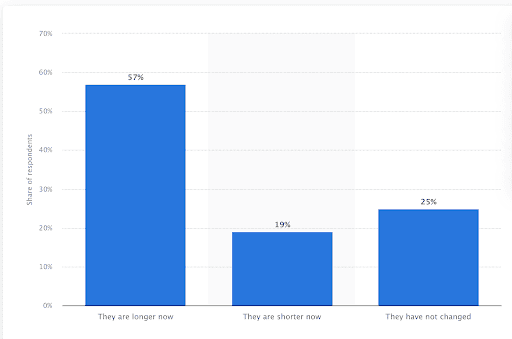
Having a well-defined B2B sales process is one of the most vital aspects of success for your organization. After all, significant revenue generation is dependent on the sales team. However, one of the classic problems that sales teams face is “how to shorten b2b sales cycle”. According to TrustRadius, 57% of the vendors believe that the B2B sales cycle has become longer after the pandemic.
Image Source: Statista
This can happen due to multiple decision makers, talking to the wrong prospect, nurturing the lead, and more. In B2B sales, a shorter sales cycle is the holy grail. Nearly tough to locate, but doing so could grant your company an endless existence (or something pretty close.).
This article will discuss some of the simplest and most tried-and-true tactics for shortening your B2B sales cycle to enhance productivity and save costs.
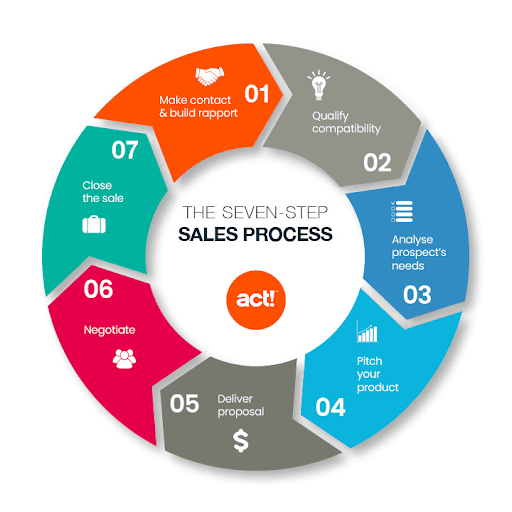
Furthermore, it enables salespeople to understand better where a person is in the buyer’s journey so that they can tailor their efforts accordingly.
Image credit: DevriX
Why is a B2B sales cycle so lengthy?
The length of sales cycle varies between industries and company size. To give you quick fact check, an average b2b sales cycle length is between 1-6 months. Breaking it even further, new customers tend to lean on the longer side whereas existing customers usually take around 1-3 months. A clear indication of how valuable retention is. Here’s are the possible reasons why b2b sales cycle are lengthy,
Multiple decision-makers (stakeholders) involved: According to Gartner, the average B2B buying group can include 6 to 10 decision-makers, each of whom has at least five pieces of information they want to discuss separately.
More expensive than usual: These sales typically include more complex products/services. They cater to the needs of entire organizations, not just people. A Spotify subscription, for example, vs. a music label making arrangements to have their artists’ music distributed on the site.
Complicated buyer journey: The B2B buyer journey is a multi-step, non-linear process in which customers traverse back and forth between the various stages of the purchasing funnel before reaching a final choice.
Extensive competitor review takes time: This circling takes time and requires a careful review of all possible offers from competitors.
Usually it’s a good practice to compare your sales cycle length with industry benchmarks. However, you should also keep in mind that it still varies based on your product offering.
How to shorten B2B sales cycle
If you want a consistent revenue flow, you must keep a close eye on and handle your sales process. There is a close connection between good sales management and expanding your business, as shown by a survey in Harvard Business Review (HBR). The growth rate of a company can speed up by managing its sales pipeline well, and it can grow even more by mastering a few key strategies.
The road to shortening your B2B Sales Cycle:
1. Review your sales process to have a well-defined one
Sales representatives may assess their performance and make wiser decisions with a clearly defined sales process. The same HBR survey that was previously cited found that when companies take the time to determine a precise, formalized, and reliable sales process, their agents are better able to manage the pipeline. Businesses with formal business processes can generate 18% more income than those with irregular channels.
Because the sales cycle follows the prospect as they progress from lead to customer, it replicates the buyer journey from the sales team’s perspective. As a result, each subsequent cycle stage should demonstrate a more significant commitment to meeting the customer’s needs.
Here are some things you can do to ensure your sales reps’ efforts are not in vain:
Examine your present procedure.
Create a buyer’s journey for your ideal customer.
Distinguish between the steps prospects do when moving onto the next stage.
Determine your salespeople’s exit criteria.
Analyze the process’s outcomes.
When traversing the buyer journey, carefully detailing all sales cycle stages and creating specific milestones might boost your sales. They will be aware of the current situation of a given transaction and how they should manage it in the future.
2. Focus on improving sales management.
Analyzing how many customers leave at each stage and how long it takes for customers to move through the cycle will help you determine its efficiency.
Similarly, you should keep an eye on how much time and money your sales staff is allocating to each stage and determine whether or not these activities constitute an efficient use of those resources.
Even though data can be tedious, knowledge like this can completely revitalize your sales cycle.
3. Continue improving your skills and methods.
Research by the TAS Group shows that as many as 67% of salespeople don’t meet their goals. Moreover, 25% of businesses have no idea if their sales team met their goals.
More one-on-ones and group get-togethers are needed to ensure that every sales member receives consistent training to overcome their unique obstacles to success. Targeted training programs for specific sales challenges can help your team take ownership of the solution and make better decisions.
4. Get your lead scoring on point
The most critical step in shortening the sales cycle is pursuing highly qualified leads.
Sending every prospective customer straight to sales won’t ensure they’ll be a quality lead because not all leads are made equal. However, 61% of B2B marketers forget this, which slows down the process. The sales pipeline becomes congested when unqualified leads are added to the mix.
By investing time in early qualifying, you spend less time with customers who will never buy or will only commit to a small transaction.
According to Salesforce, nurturing leads can increase sales possibilities by 20%. Here are a few things you can do to score the correct ones properly:
Gather sufficient information, create a list of all your leads, and prioritize the best ones.
At each point of the sales cycle, segment and target lead with customized communications.
Guide your prospects toward reaching a decision; do not force them.
Establish benchmark criteria highlighting your leads’ steps to become sales-ready.
Obtain genuine and reliable referrals.
5. Sales and Marketing alignment
Aligning your marketing and sales teams are essential for maximizing your sales cycle’s effectiveness. Both groups must be on the same page regarding marketing initiatives, target demographics, and the customer’s path to purchase.
You can improve the effectiveness of your marketing messaging and campaigns for warming up leads by having your sales team share any insights they gain during prospecting or interactions with customers with your marketing team.
In contrast, marketing departments can advise sales departments about the specific content and nurturing activities that individual leads have been exposed to before a sales call.
According to MarketingProfs, this coordination can raise sales win rates by 38% and customer retention rates by 36%.
6. Plan your customer meetings meticulously
What do you hope to achieve during (and after) the initial conversation? What about the second? What about the third? The sales cycle stops frequently because the service provider (or seller) lacks a plan. Prepare for each interaction by asking yourself the following questions:
What is my objective with this prospect?
What am I hoping to achieve with this conversation?
What are my potential strengths?
What are my weaknesses?
What can you expect based on the responses, and what is your next step?
7. Use automation as much as possible
A lengthy sales cycle will inevitably result in more leads in your pipeline.
This could, however, create difficulties in tracking, monitoring, and managing these leads.This is where automation comes into play, relieving you of several manual activities and freeing up your time.
The automation of manual processes increases productivity, precision, and efficacy. In addition, streamlining the process will improve your performance.
A Customer Relationship Management (CRM) tool is a crucial sales automation solution. It helps you keep tabs on leads and customers throughout the sales process so that no one gets lost in the shuffle.
According to Salesforce, sales productivity can increase by 14.5% with the help of a CRM solution. This will free up your sales team’s time to concentrate on high-quality leads and expedite the buying process.
The bottom line is
Shortening your B2B sales cycle is challenging but not impossible.
The data doesn’t lie: most of the fault lies with human error. Both salespeople and businesses have been guilty of becoming too comfortable with their approaches to making sales. Businesses lose millions of dollars annually due to missed opportunities caused by inadequate communication and sales techniques. Though the idea of a fully formed sales process is uncommon, efforts to reduce human error may help businesses shorten the process.
Keeping the above tips in mind can help you close sales faster.
When you have greater control over your sales process and take the time to optimize your B2B sales cycle, you will achieve tremendous success and scale your business more quickly.